A word to you
You may have come through a call that you cannot put into words. You did your work. You stayed with your crew. Now the station is quiet, or you are home, and something still does not feel right.
Perhaps you are preparing for the work ahead. You know that one day the call may involve a child, a friend, or one of your own crew. You want to be ready, but you cannot know how every call will affect you.
You do not have to act as though nothing touches you. You are a person God made and loves. You can be skilled at your work and still need care. Being shaken does not prove that your faith is weak. Feeling numb does not prove that you no longer care.
Jesus does not ask you to hide before you come to Him. Bring Him what is there: grief, fear, anger, questions, or the tired feeling that has no clear name. If all you can pray is, “Lord, help me,” you can begin there.
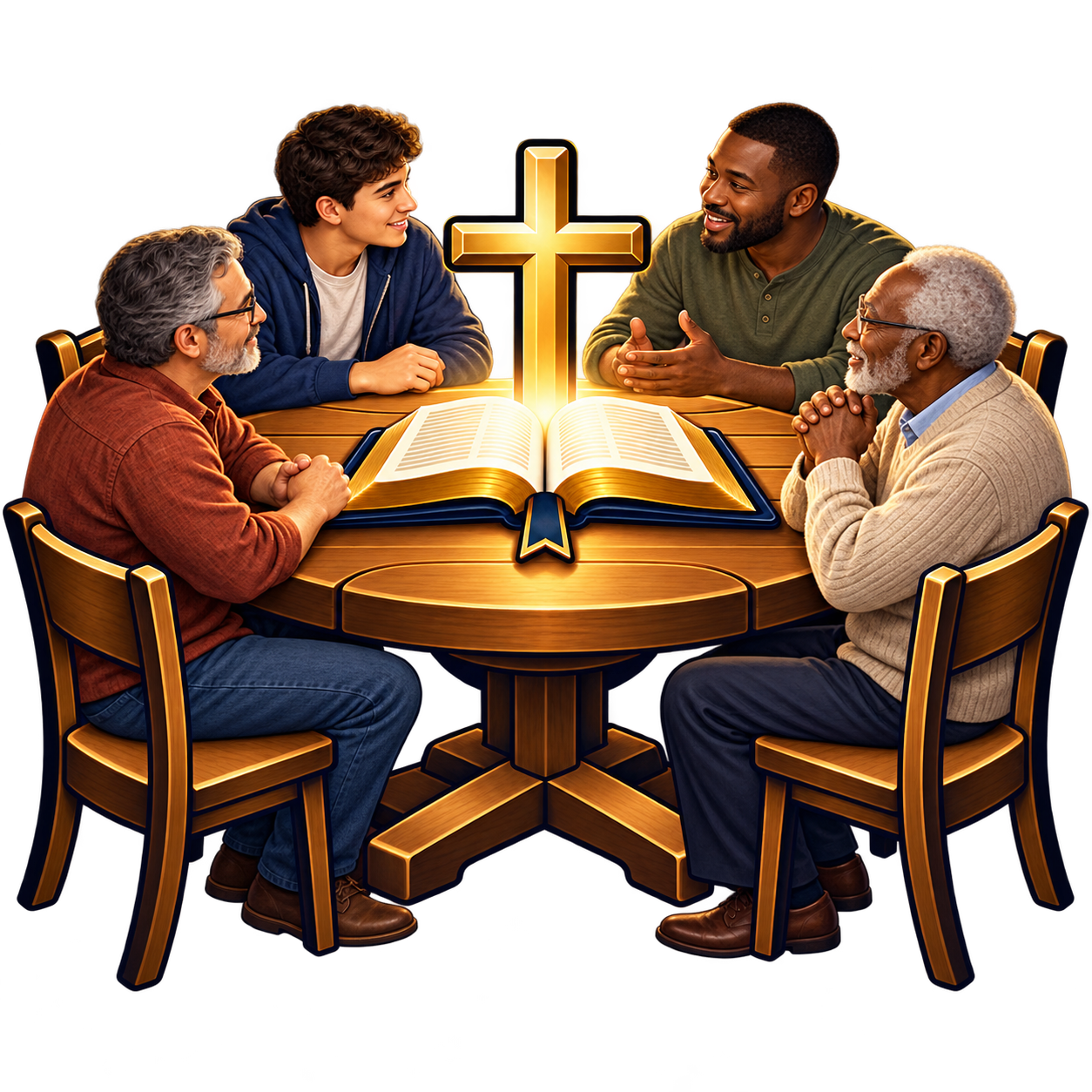
These pages are meant to be read slowly. You do not have to finish a lesson in one sitting. You may skip a question, stop reading, or ask someone to sit with you. You never have to tell the group the details of a call. We use made-up examples to protect real people and keep the discussion from becoming graphic.
Read the Bible passage in its setting. The short verse printed in each lesson gives you a place to begin. The words that follow explain its meaning and apply it to daily life. The prayers are examples. Use your own words if you wish.
If you need a doctor or counsellor, please seek one. Prayer, church care, and sound treatment can work alongside each other. You do not have to wait until you are at a breaking point. Your family may need support too. The national help pages near the front give places to begin.
If the call has just happened, start with the next page. If you are struggling to stay safe, go straight to Appendix A and seek help now. The lessons can wait.
What holds these studies together
The Bible is our final guide for what we believe and how we live. The creators’ statement of faith helps state the beliefs behind this study. It does not take the Bible’s place. This book seeks to stay within that framework; it is an independent ministry resource. [1]
God made us in His image. Every person has worth, including the victim, the suspect, the frightened family member, and the worn-out responder. Sin has damaged our world and our own hearts. Jesus Christ, God’s Son, died for our sins and rose from the dead. We are saved by God’s grace through faith in Him, turning from sin toward God. Our service does not earn salvation.
The Holy Spirit lives in believers and helps us grow in faith and obedience. God also places us in a church where we can receive teaching, prayer, and care. We need that help even when we cannot be the strong person in the room.
We will not use a Bible verse to promise that a Christian will escape injury, always feel calm, or recover by a certain date. We will not call every symptom a sin. We will take real wrongdoing seriously without assuming that grief or fear proves wrongdoing.
The practical care in these pages draws on current health guidance. Such guidance can help us care for the body and mind. It does not replace the gospel. Ordinary breathing and noticing the room are simple physical skills. We give them no spiritual power. We do not teach spirit guides, energy healing, or practices that require worship apart from the God revealed in Scripture.
Each person may ask what a treatment involves and raise concerns with a trusted pastor and qualified clinician. An unfamiliar treatment name alone does not tell us whether the treatment is sound. We should look at what it actually teaches and does.
Using the book
Use one lesson at a time, on your own or with trusted people. In a group, allow time to read the wider Bible passage and listen. Personal questions are optional. A session may be short if people are tired. Do not push through distress to finish a lesson.
The Bible verses are NASB 1995. The teaching uses plain language; the Bible text itself has not been rewritten. Technical notes, sources, and guidance for leaders are at the back.
Scripture quotations taken from the (NASB®) New American Standard Bible®, Copyright © 1960, 1971, 1977, 1995 by The Lockman Foundation. Used by permission. All rights reserved. www.Lockman.org. [19]
AI assisted with drafting, editing, and source research at Steve Baley’s direction. This edition still needs review by qualified people before group use.